
A Green Belt Approach to Packaging Automation
Comments Off on A Green Belt Approach to Packaging Automation
A Green Belt Approach to Packaging Automation
Lean Six Sigma Green Belt projects are built around one objective: identifying process inefficiencies and implementing measurable improvements that reduce waste, improve quality and increase operational performance.
A recent project with Killer Brownie demonstrates how a data-driven packaging automation initiative can deliver measurable operational improvements while creating a scalable foundation for future growth.
The Challenge: Identifying Process Waste
Killer Brownie first partnered with TPC Packaging Solutions after meeting our team at PACK EXPO 2022. At the time, operators were manually erecting and taping boxes across multiple packaging streams. It was a repetitive process that consumed labor while introducing inconsistency.
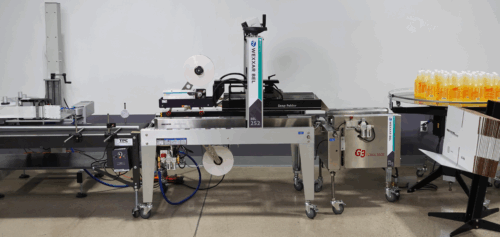
The initial implementation of a Wexxar Bel semi-automatic case erector standardized box preparation across five packaging lines, improving consistency and reducing manual work.
As production volumes continued to increase, however, a new set of challenges emerged that represented classic Lean Six Sigma improvement opportunities:
- Packaging-line downtime reaching up to 90 minutes per shift.
- Production losses estimated at approximately $250 per minute of downtime
- Frequent changeovers caused by multiple box sizes
- Manual stacking and palletizing operations
- Labor-intensive packaging processes that limited throughput
From a Green Belt perspective, these challenges represented several forms of operational waste, including waiting, unnecessary motion, excess labor and process variation.
Rather than treating each issue independently, Killer Brownie sought a comprehensive solution that would improve the entire packaging workflow.
Applying a Green Belt Mindset
TPC Packaging Solutions worked closely with Killer Brownie to evaluate material flow, packaging requirements, available floor space, and future production goals. Instead of recommending individual pieces of equipment, our engineering team designed an integrated packaging line focused on flexibility, efficiency, and long-term scalability.
| Solution | Continuous Improvement Benefit |
| Wexxar WF30 Auto Adjust | Push-button changeovers eliminate lengthy manual adjustments between box sizes. The user-friendly setup reduces reliance on tribal knowledge. |
| Span Tech & Shuttleworth Conveyors | Optimize product flow while maximizing limited floor space. |
| Cantilevered Hand-Pack Station | Improves ergonomics without increasing the line footprint. |
| FANUC Case Palletizer | Eliminates manual palletizing while improving consistency and throughput. |
Measuring the Results
One of the defining characteristics of any Six Sigma Green Belt project is measurable improvement.
Following implementation, Killer Brownie achieved significant operational gains:
| Metric | Before | After |
| Packaging downtime | Up to 90 minutes per shift | 30 minutes or less |
| Labor required for 16-count tray line | 26 employees | 16 employees |
| Throughput | Baseline | Increased by more than 25% |
| Box-size changeovers | Manual adjustments | Push-button automation |
| Palletizing | Manual | Fully automated |
Reducing Process Variation
The Wexxar Bel Auto Adjust system also makes changeovers significantly more user-friendly. Instead of relying on manual adjustments or operator experience to configure the case erector for different box sizes, operators can select preset case dimensions and sealing requirements directly from the machine’s control panel. With the push of a button, the system automatically adjusts the machine to the selected specifications, eliminating time-consuming, tool-dependent setup.
Presets can also be saved for future production runs, creating a repeatable process that reduces reliance on tribal knowledge and helps operators achieve consistent results with minimal training.
From a Six Sigma Green Belt perspective, this standardization helps reduce process variation by making changeovers more consistent and repeatable, regardless of which operator is running the equipment.
Building for Long-Term ROI
Many process improvement projects focus solely on solving today’s bottleneck. A stronger Green Belt strategy considers future performance as well.
The packaging line was intentionally designed to accommodate multiple product configurations without requiring additional equipment investments. This flexibility allows Killer Brownie to respond to changing production requirements while minimizing future capital expenditures.
According to Matt Tye, Director of Manufacturing at Killer Brownie, the long-term financial return could reach hundreds of thousands of dollars through reduced downtime, labor savings, and the ability to support continued business growth.
“TPC always had our best interests in mind.”
“I love working with the TPC team. They have been super instrumental in helping us grow.”
Continuous Improvement After Installation
Another principle of Lean Six Sigma is sustaining improvement over time.
TPC Packaging Solutions continues to support Killer Brownie months after installation by providing ongoing technical assistance, coordinating OEM training, and responding quickly whenever operational questions arise.
As Matt Tye explains:
“The TPC team is transparent, approachable, easy to work with, and the knowledge and talent they have on site is second to none for me.”
This continued partnership helps ensure the process improvements remain effective long after the equipment is installed.
Your Next Green Belt Project May Be in Your Packaging Line
When manufacturers think about Lean Six Sigma initiatives, packaging is often overlooked. Yet it frequently contains hidden opportunities to reduce downtime, improve labor efficiency, eliminate unnecessary motion, and increase throughput.
Whether you’re pursuing a formal Green Belt project or simply looking to improve operational performance, TPC Packaging Solutions takes a consultative, engineering-driven approach to designing packaging systems that align with your continuous improvement goals.
From reducing waste and increasing flexibility to supporting long-term scalability, our team helps manufacturers build packaging operations that are designed for measurable results.
Ready to identify your next process improvement opportunity? Contact TPC Packaging Solutions to schedule a consultation and discover how automation can help support your Lean Six Sigma initiatives.